The snow
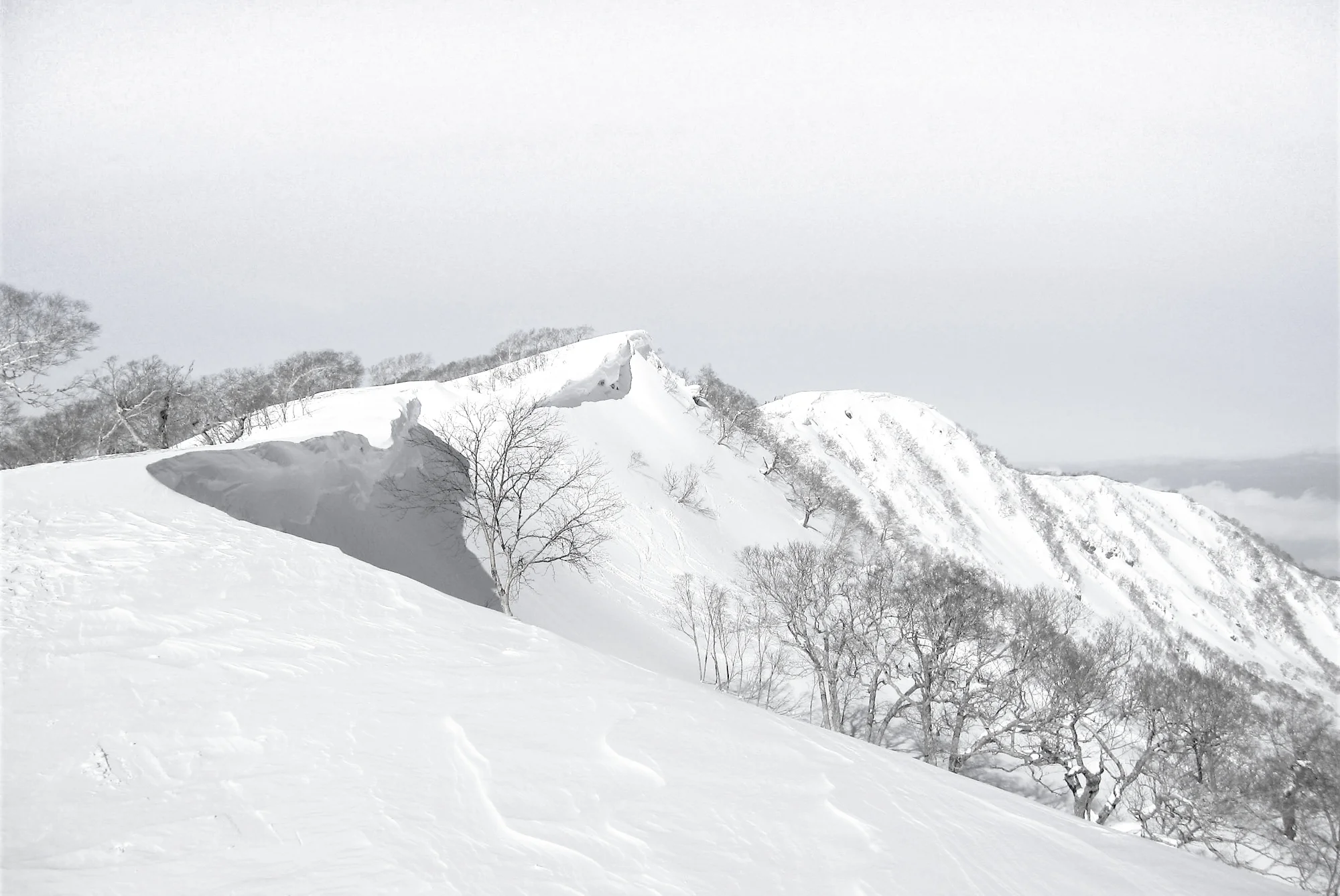
Myoko is famous for its deep, consistent snowfall and classic Japanese powder conditions. Storms rolling in from the Sea of Japan bring regular snow throughout winter, creating a deep base and frequent fresh turns across the resorts. December usually builds the season base, January and February are peak powder months, and March often brings a mix of fresh snow, clearer skies and softer spring conditions. The snow here is great for both skiing and snowboarding: forgiving underfoot, fun in the trees, excellent for powder riding, and reliable enough to keep conditions enjoyable across a long winter season.
Akakura Kanko and Akakura Onsen ski resort
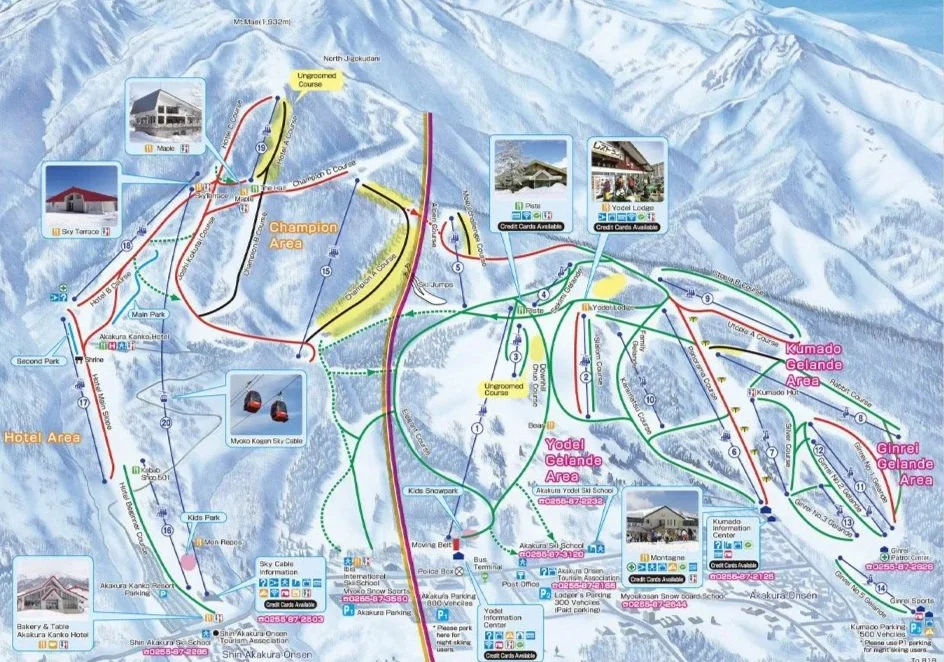
Akakura is one of Myoko’s main ski areas, made up of the connected Akakura Kanko Resort and Akakura Onsen Ski Area. Together, they offer around 27 courses and 21 lifts/gondola facilities, with terrain ranging from wide beginner-friendly slopes to steeper intermediate and advanced runs. Akakura Onsen is known for its broad, mellow pistes, night skiing, and family-friendly terrain, while Akakura Kanko offers longer runs, more varied gradients, and excellent views from higher on the mountain.
Ikenotaira and Suginohara ski resorts
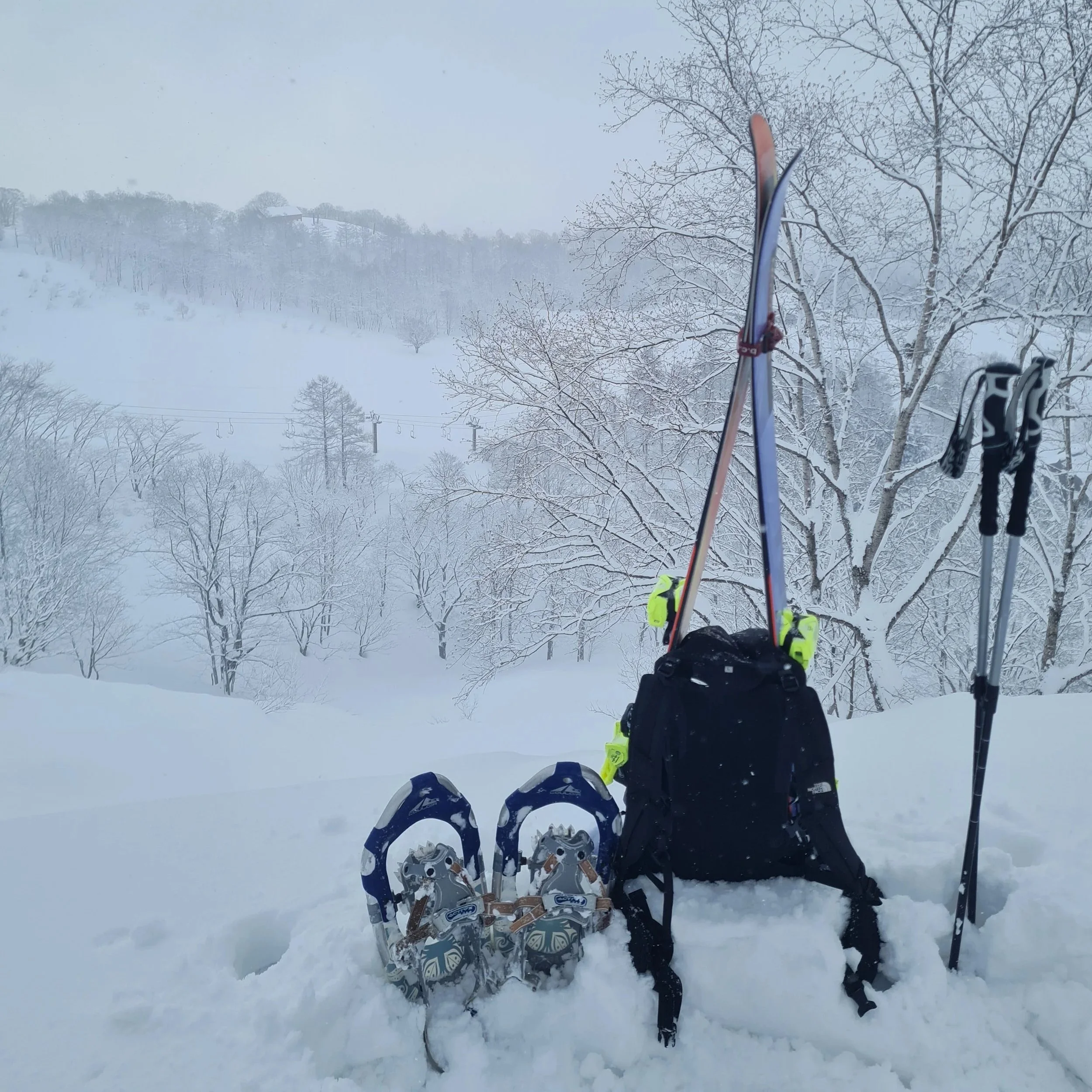
Ikenotaira and Suginohara are two of Myoko’s best areas for wide, relaxed cruising and big mountain scenery. Ikenotaira offers 10 courses and 6 lifts, with broad beginner and intermediate slopes, a popular snow park, and some ungroomed/tree areas on the Alpen Blick side. Nearby Suginohara is larger, with 17 courses and 5 lifts, including a gondola, plus one of Japan’s longest ski runs at 8.5 km. The terrain across both resorts is ideal for beginner to intermediate skiers and snowboarders, while Suginohara’s steeper upper sections, powder zones, and long vertical drop give stronger riders plenty to enjoy too.